
Currently Empty: $0.00


As parents, we think about everything — their food, their school, their toys, their screen time. But one thing we rarely think about is something so simple: the color of their bedsheets.
It may sound small, but your child’s bedroom is their little world. It’s where they build pillow forts, talk about their day, cuddle up after a meltdown, and drift into dreams. The colors around them — especially on their bed — quietly shape how they feel.
Children are more sensitive to color than we realize. What looks “cute” to us might feel calming, exciting, or even overwhelming to them.
Let’s talk about how.
Soft Blues: For Calm Nights
If your child finds it hard to settle down at night, soft blue bedsheets can really help. Blue naturally feels peaceful — like the sky or the ocean. It gently tells the brain, “It’s time to relax.”
Many parents notice that cooler tones make bedtime smoother. Less tossing, less resistance, and a little more calm.
If your little one is full of energy all day, blue might be your best friend at night.

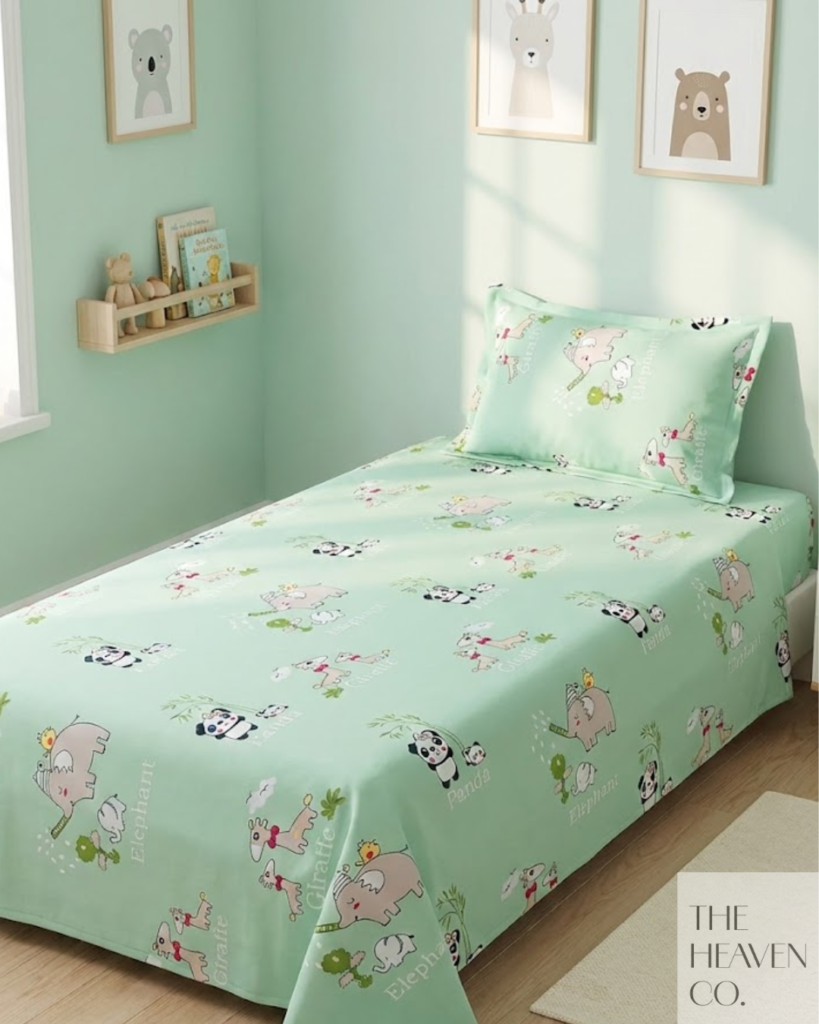
Gentle Greens: For Balance and Comfort
Green feels fresh and safe. It reminds us of nature — trees, grass, open spaces. For children, softer shades like sage or mint can create a feeling of security without making the room feel dull.
Green is wonderful if you want the room to feel peaceful but still warm and inviting.
It’s a beautiful middle ground.
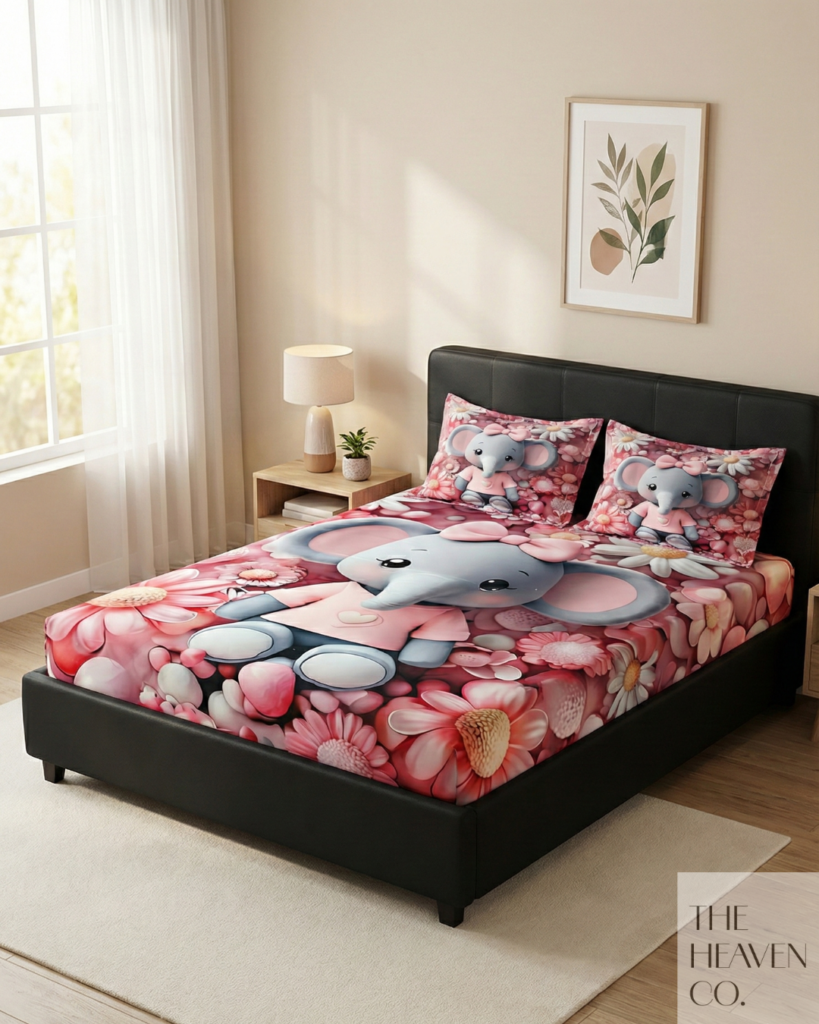
Soft Pink: For Warmth and Emotional Security
Soft pink isn’t just pretty — it can actually feel comforting. Lighter shades create a cozy, nurturing atmosphere. It’s the kind of color that makes a room feel loving and gentle.
For younger kids especially, soft pink tones can create a sense of safety that helps them relax into sleep.
Just avoid overly bright pinks — those can feel a bit too energetic before bedtime.

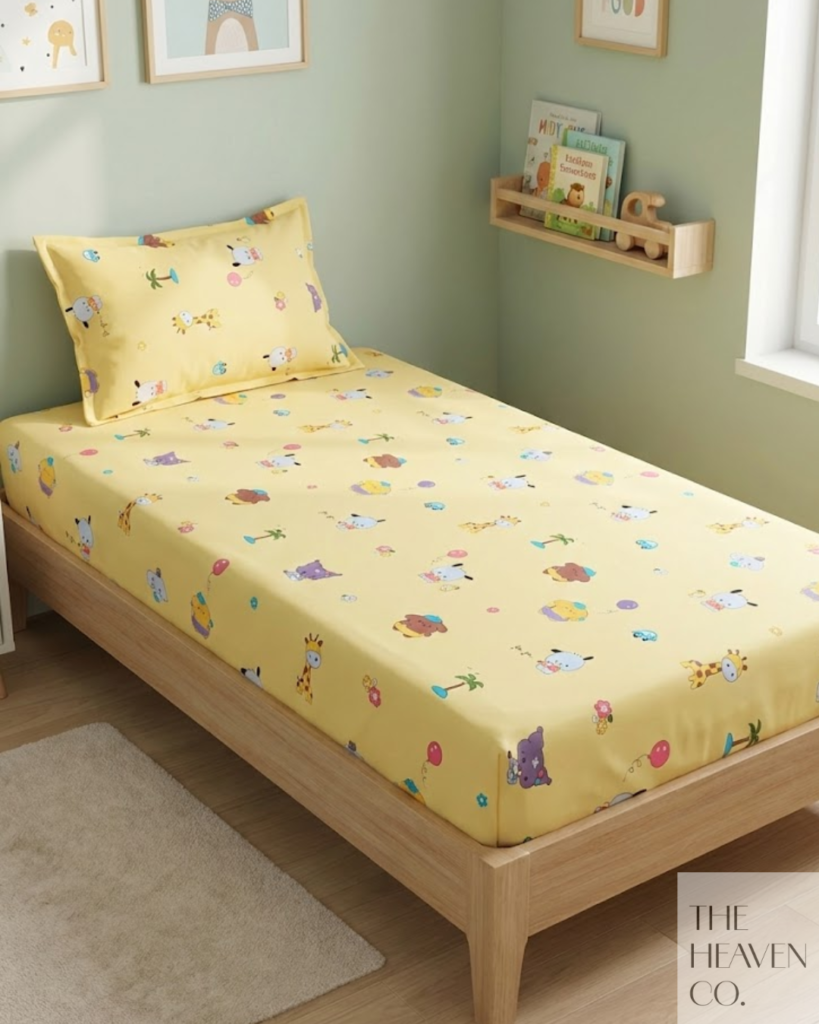
Yellow: Happy but Use It Carefully
Yellow is cheerful and full of sunshine. It can bring joy into a room. But when it comes to sleep, less is more.
Soft, buttery yellows can feel uplifting without being too stimulating. Bright, bold yellows, however, might make it harder for kids to wind down.
If your child loves bright colors, you can keep those for play areas and choose softer tones for their bedding.
Neutrals: Simple and Peaceful
White, beige, or soft cream bedsheets create a calm and uncluttered feeling. They don’t demand attention — and sometimes that’s exactly what a child needs before sleep.
Neutrals also give you the flexibility to add small pops of color through cushions or toys without overwhelming the space.
For sensitive or easily overstimulated kids, this can make a big difference.
A Quick Note About Bright Reds and Bold Prints
Bright reds, strong oranges, and very busy patterns can feel exciting — which is great for daytime play but not ideal for bedtime.
Too much visual stimulation can make it harder for little minds to switch off.
If your child loves bold designs, try balancing them with softer base tones.
It’s Not Just About Trends — It’s About Your Child
Every child is different.
Some need calm.
Some need comfort.
Some need balance.
Some just need a space that feels like theirs.
When choosing bedsheets, think about your child’s personality. Are they highly energetic? Sensitive? Easily distracted? Naturally calm?
The right color won’t magically fix sleep struggles — but it can gently support better rest and a more peaceful bedtime routine.
The Small Details Matter
At the end of the day, bedtime should feel safe and soothing. Something as simple as the color beneath your child as they fall asleep can quietly influence their mood and comfort.
It’s not just fabric.
It’s the background to their dreams.
And sometimes, the smallest changes make the biggest difference